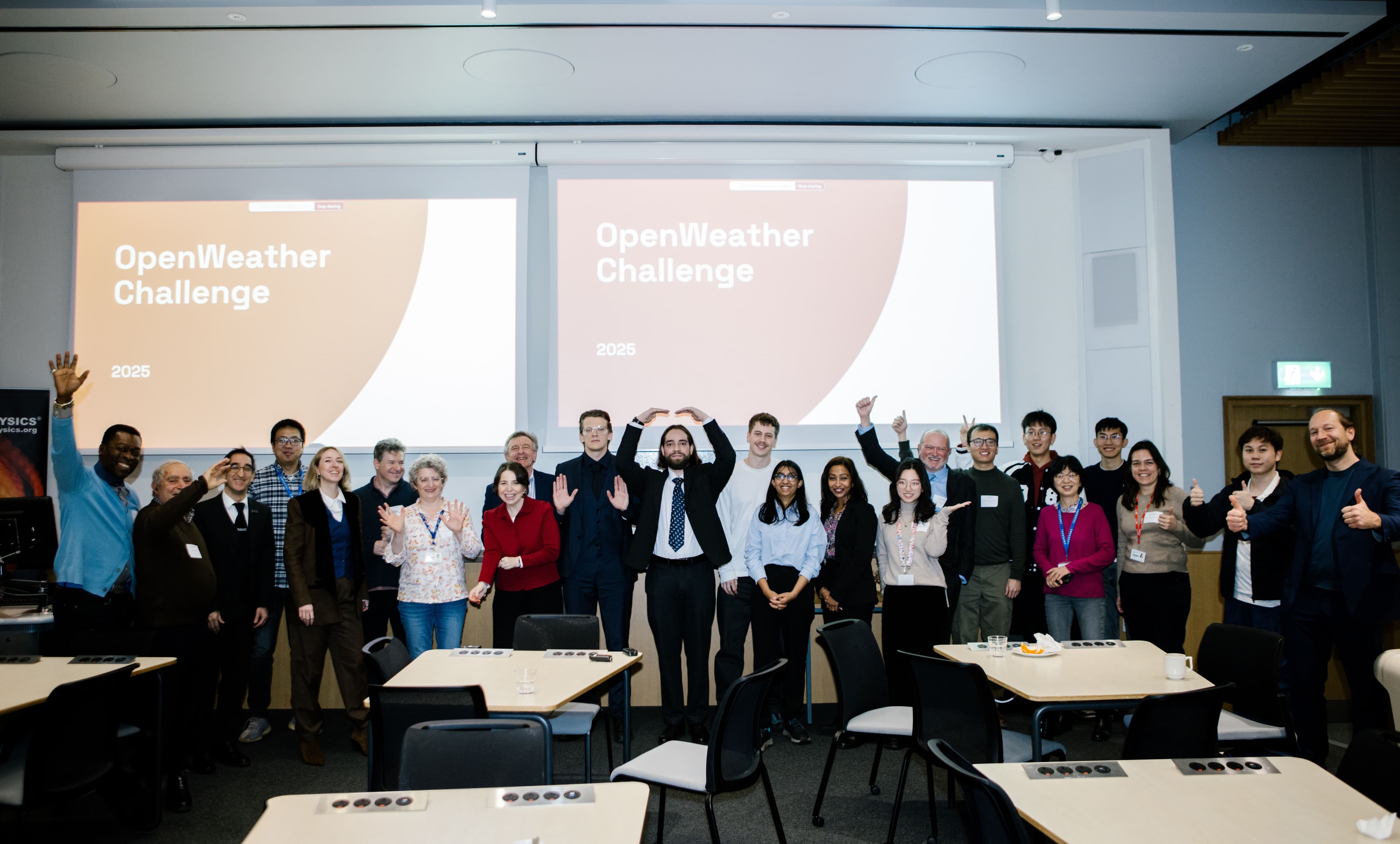


The 2025 OpenWeather Challenge highlighted the ingenuity of students and researchers who utilize meteorological data to solve complex real-world problems. Supported by the Weather Foundation, this annual event encourages the academic community to develop applications that go beyond simple forecasting. The foundation continues to support educational initiatives that promote data literacy and the accessible application of weather technologies.
This year, the winning projects demonstrated remarkable diversity, ranging from institutional risk management and environmental health monitoring to immersive digital simulation. The following three winners were selected based on their technical execution, practical utility, and the innovative ways they integrated OpenWeather data products.
1st Prize: Ashley Turner, Imperial College London: WIRE (Weather-Induced Risk Exposure)
The first prize was awarded to Ashley Turner from Imperial College London for WIRE, a system designed to modernize how care institutions handle weather-related risks. Organizations with a duty of care, such as nursing homes, schools, and hospitals, often rely on generic weather reports that lack context for vulnerable populations. WIRE bridges this gap by translating meteorological data into specific hazard scores.
The platform utilizes the OpenWeather Current Weather, Forecast, and Air Pollution APIs to analyze incoming data streams. Instead of simply reporting temperature or wind speed, the system calculates risk levels across eight distinct categories:
- Heat stress and cold exposure
- Respiratory risk and dehydration risk
- Slip or fall risk and travel safety
- Storm severity and local flood risk
Each category is scored on a scale of one to five, providing care managers with actionable intelligence. For example, a standard forecast might indicate a temperature of 8°C, which is mild for the general population. WIRE identifies this as a potential cold exposure risk for elderly residents and prompts specific safety protocols.
This approach parallels established commercial care management platforms like Log my Care or Nourish, which digitize patient records and daily tasks. WIRE adds a critical environmental layer to these operational workflows, ensuring that something as simple as a slip risk assessment is not overlooked during busy shifts. The application features a clean, high-contrast user interface built with Python and Next.js, ensuring low-latency updates for decision-makers who need to plan staffing and safety measures up to five days in advance.
Watch the project video explanation on YouTube.
2nd Prize: Ivander Andreas Wijaya, Universitas Indonesia: AIRAware
Ivander Andreas Wijaya from Universitas Indonesia secured the second prize with AIRAware, an environmental health application that visualizes the often invisible threat of airborne microplastics. While many existing applications focus solely on the Air Quality Index (AQI), AIRAware introduces a novel "Microplastic Risk Score."
The project functions on the premise that standard meteorological APIs can serve as proxies for microplastic movement. The application correlates real-time weather variables, specifically wind speed, atmospheric pressure, and precipitation, with PM2.5 concentrations. By overlaying precipitation tiles on particulate matter data, the app identifies "Washout" events where rain effectively cleans the air, as well as "Transport" corridors where wind may carry particles into new areas.
The system employs a custom AI backend to interpret this atmospheric physics and generate context-aware health guidance. This moves beyond the capabilities of standard air quality monitors like IQAir or Plume Labs by offering specific insights into particle resuspension and adhesion. The result is a tool that helps users understand when environmental conditions might increase their exposure to microplastics, transforming raw data into a tangible health safety resource.
Watch the project video explanation on YouTube.
3rd Prize: Madara Premawardhana, University of Buckingham: WeatherSim
The third prize was awarded to Madara Premawardhana from the University of Buckingham for WeatherSim, a project that bridges the gap between physical weather systems and virtual environments. This tool integrates the OpenWeather API with Unreal Engine 5 to create real-time, location-based weather simulations.
WeatherSim fetches live data regarding temperature, humidity, cloud coverage, and precipitation to dynamically update the virtual world. If it is raining in a specific real-world location, the system automatically adjusts the digital environment to match, altering sky color, lighting, fog density, and sun position. This creates a "digital twin" of current atmospheric conditions.
This technology has significant implications for the gaming and simulation industries. It functions similarly to the weather engine found in Microsoft Flight Simulator, which uses live meteorological data to create realistic flying conditions. WeatherSim democratizes this capability for developers using Unreal Engine, opening new possibilities for architectural visualization, virtual tourism, and educational tools where accurate reflection of the real world is essential.
Watch the project video explanation on YouTube.
The winners of the 2025 OpenWeather Challenge illustrate the evolving landscape of weather data application. From protecting vulnerable individuals in care homes to visualizing microscopic pollutants and simulating global weather in 3D engines, these projects showcase the versatility of the OpenWeather APIs. The Weather Foundation remains committed to fostering this level of academic excellence, ensuring that the next generation of developers has the tools required to address global challenges through data.